Introduction
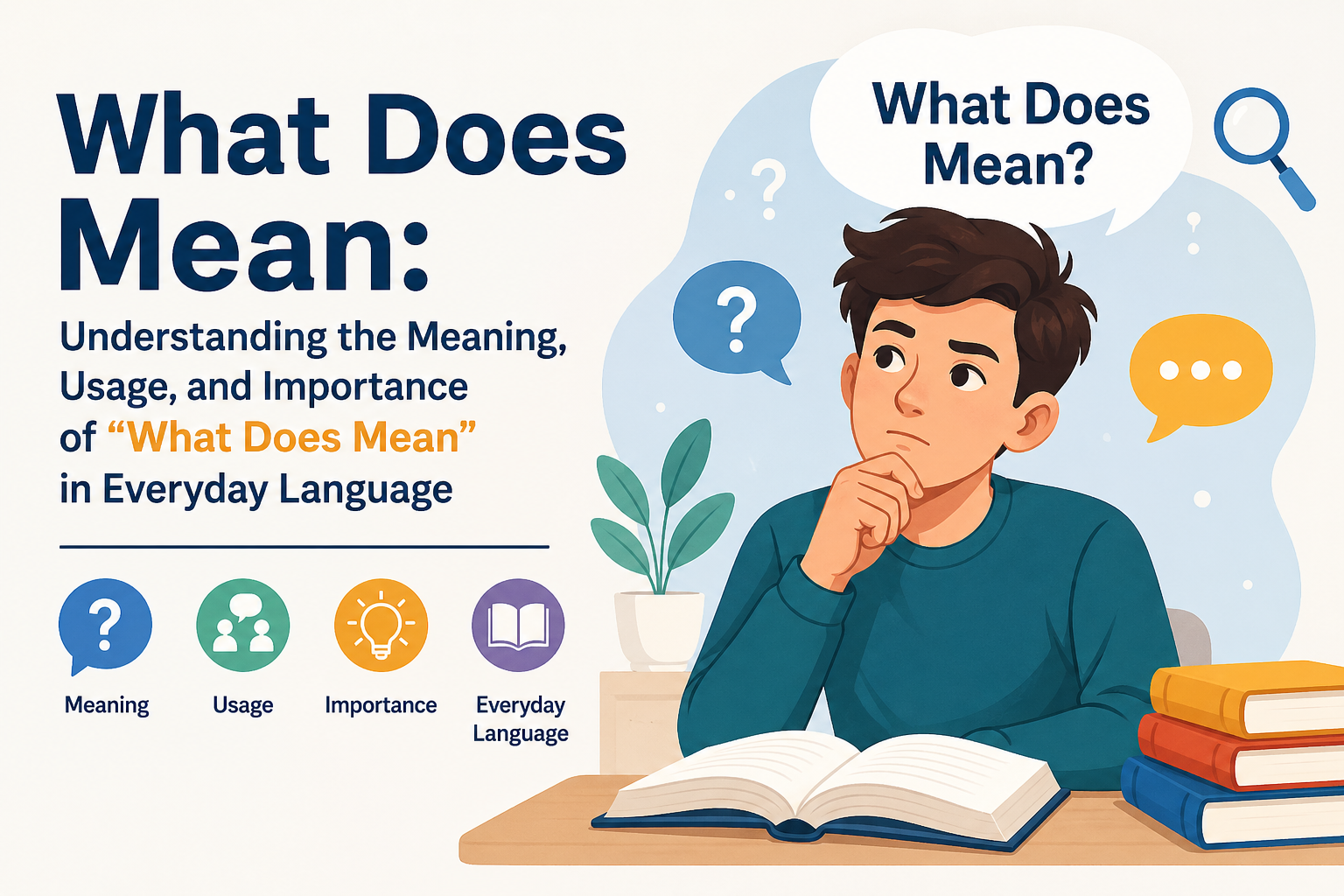
The phrase “what does mean” may appear incomplete or grammatically unusual at first glance, yet it reflects a common pattern in everyday language, especially among learners and in informal communication. It is often used as a shortened or simplified version of the more standard question, “What does it mean?” Despite its brevity, the phrase carries a clear intention: to seek clarification, understanding, what does 444 mean explanation of a word, idea, or expression.
The Correct Form and Grammar Behind It
From a grammatical perspective, the complete and correct structure of the phrase is “What does it mean?” This form includes the subject “it,” which refers to the word, phrase, or concept being questioned. The auxiliary verb “does” supports the main verb “mean,” forming what does mean proper question in English grammar.
However, when people say “what does mean,” they often omit the subject for simplicity or due to language learning stages. While this omission may not align with formal rules, it does not entirely hinder comprehension. Understanding the correct structure helps learners refine their language skills, while recognizing the simplified version allows for better interpretation what does 67 mean in slang informal speech and writing.
Why People Use “What Does Mean”
The use of “what does mean” is particularly common among non-native English speakers who are still mastering sentence structure. In many languages, similar questions do not require an explicit subject, which can influence how learners construct sentences in English. As a result, this phrase becomes what does sybau mean natural, though simplified, way of asking for meaning.
Additionally, the rise of digital communication has contributed to the popularity of shortened expressions. In text messages, social media, and online chats, people often prioritize speed over grammatical precision. This trend has made phrases like “what does mean” more acceptable what does 67 mean in slang informal contexts, even if they remain nonstandard in formal writing.
The Importance of Asking About Meaning
Asking questions like “what does mean” or “what does it mean” is essential for learning and effective communication. These questions reflect curiosity and a willingness to understand new information, which are key components of language development and intellectual growth.
By seeking clarification, individuals can avoid misunderstandings and build a stronger foundation language. This habit is especially important in a globalized world where communication often occurs between people with different linguistic and cultural backgrounds. Understanding meaning ensures that messages are interpreted correctly and that communication remains clear and meaningful.
Context and Its Role in Interpretation
Context plays a crucial role in understanding the meaning behind any word or phrase. Even when what does 6 7 mean question is phrased imperfectly, such as “what does mean,” the surrounding context often provides enough information to interpret the intended message. This demonstrates the flexibility of language and the ability of speakers to adapt to variations in expression.
For example, tone, situation, and accompanying words can all influence how a phrase is understood. In many cases, listeners or readers can بسهولة infer the intended meaning despite grammatical inaccuracies. This highlights the importance what does 67 mean in slang context as what does mean guiding factor in communication, enabling understanding even when language is not used perfectly.
Language Learning and Common Mistakes
Mistakes like using “what does mean” instead of “what does it mean” are a natural part of the language learning process. They reflect the challenges of mastering grammar, vocabulary, and sentence structure simultaneously. Rather than viewing these errors negatively, they can be seen as stepping stones toward improvement.
Teachers and learners alike can benefit from recognizing these patterns and addressing them constructively. By understanding why such mistakes occur, learners can develop strategies what does 444 mean correct them while maintaining confidence what does mean their communication abilities. Over time, consistent practice and exposure to correct forms help refine language skills and reduce errors.
The Influence of Informal Communication
Informal communication has a significant impact what does sybau mean how language is used and perceived. In casual settings, strict adherence to grammar rules is often relaxed, allowing for greater flexibility and creativity in expression. Phrases like “what does mean” thrive in these environments because they are quick, simple, and easily understood.
This influence extends to online platforms, where language evolves rapidly and new expressions emerge frequently. While formal writing still requires grammatical accuracy, informal communication continues what does mean shape how people interact and understand what does 444 mean another. Recognizing this distinction helps individuals navigate different contexts effectively.
Bridging the Gap Between Formal and Informal Language
Understanding both formal and informal language is essential for effective communication. While “what does mean” may be acceptable in casual conversation, using the correct form “what does it mean” is important in academic, professional, and formal settings. This ability to switch between styles demonstrates linguistic competence and adaptability.
Bridging this gap involves not only learning grammatical rules but also understanding when and where to apply them. By developing this awareness, individuals can communicate more effectively across different contexts, ensuring that their message what does mean both clear and appropriate for the situation.
Strengthening Understanding Through Practice and Awareness
Improving the use of phrases like “what does it mean” comes with consistent practice and increased awareness of how language works what does mean different situations. By regularly exposing oneself correct sentence structures through reading, listening, and conversation, learners gradually develop a natural sense of grammar and expression. Over time, what once felt confusing becomes intuitive, allowing communication what does 6 7 mean flow more smoothly and accurately.
At the same time, awareness of common informal patterns like “what does mean” helps learners recognize and correct mistakes without losing confidence. Instead of avoiding communication, they can focus on refining it step by step. This balance between practice and awareness is essential for building strong language skills that work effectively in both casual and formal settings.
FAQs
1. Is “what does mean” grammatically correct?
No, the correct form is “What does it mean?” but the shorter version what does mean often used informally.
2. Why do people say “what does mean”?
It is commonly used by language learners or what does mean casual communication where grammar rules are relaxed.
3. Does “what does mean” still make sense?
Yes, in most contexts, people what does sybau mean understand the intended meaning the grammatical error.
4. How can I improve my sentence structure?
Practice using complete sentences and pay attention what does mean grammar rules, especially subjects and verbs.
5. When should I use the correct form?
Use “What does it mean?” in formal, academic, or professional communication.
Conclusion
The phrase “what does mean” serves as an interesting example of how language functions in real-world communication. While it may not adhere to formal grammatical rules, it effectively conveys a desire for understanding and highlights the adaptability what does 6 7 mean language. This balance between correctness and practicality reflects the dynamic nature of communication in everyday life.