Introduction
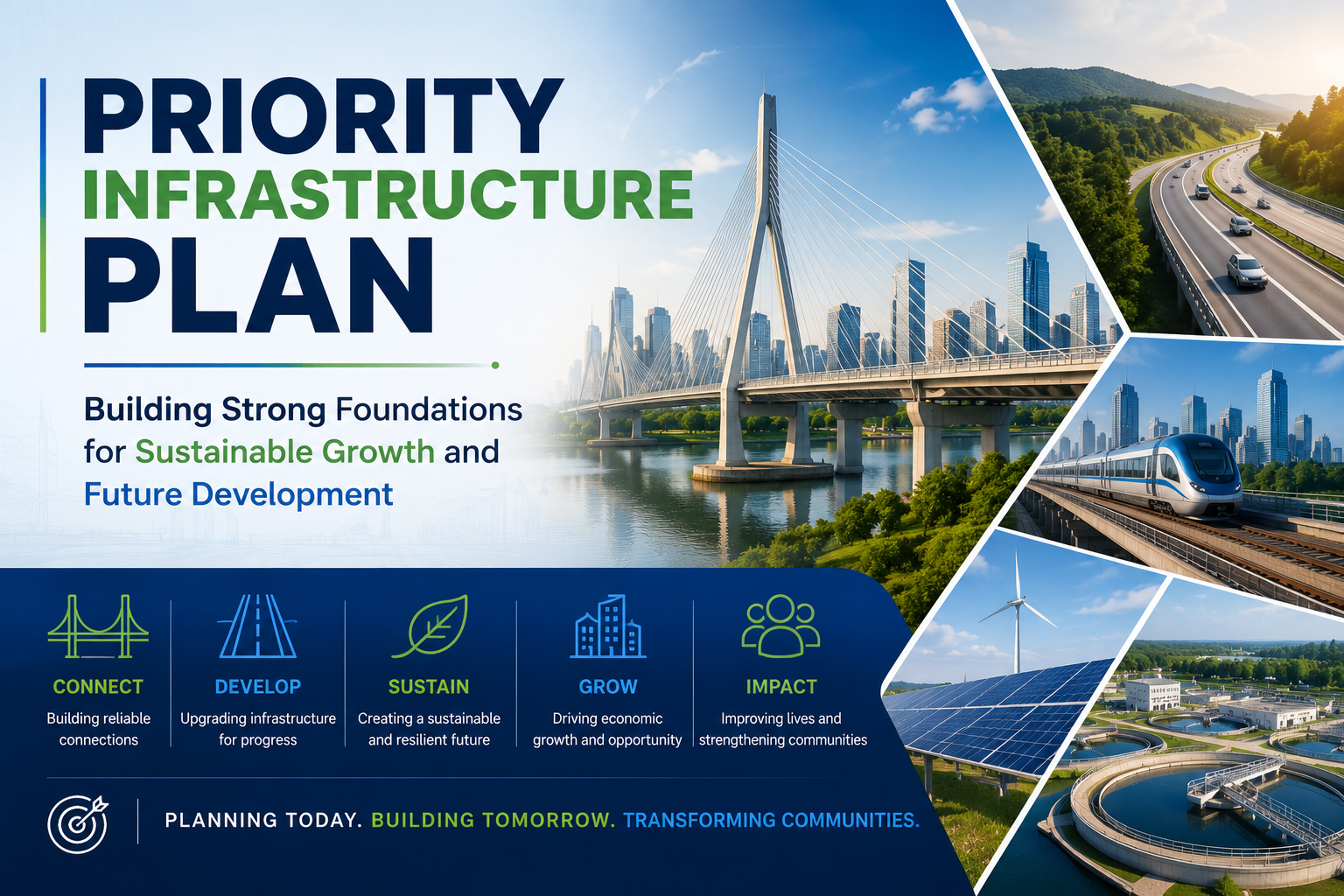
Priority Infrastructrue Plan serves as the backbone of economic development, social progress, and national prosperity. Roads, bridges, transportation systems, energy networks, communication technologies, water supplies, and public facilities all play a crucial role in supporting modern societies. As populations continue to grow and economies become increasingly interconnected, governments and organizations must develop strategic approaches to infrastructure planning and investment. A Priority Infrastructure Plan provides a comprehensive framework for identifying, prioritizing, and implementing critical projects that support sustainable development, improve quality of life, and strengthen economic resilience.
Understanding the Importance of Infrastructure Planning
Infrastructure planning Priority Infrastructrue Plan a critical process that helps governments, businesses, and communities address current needs while preparing for future growth. Effective planning ensures that transportation systems, public utilities, communication networks, and essential services can support increasing populations and economic activities. Without strategic planning, infrastructure systems may become overwhelmed, leading to congestion, inefficiencies, and reduced quality of life for citizens.
A Priority Infrastructrue Plan provides a structured approach to identifying key development priorities and allocating resources where they are needed most. By evaluating existing infrastructure conditions, future demands, and economic opportunities, planners can develop solutions that maximize long-term benefits. Strategic planning not only enhances operational efficiency but also supports sustainable development by balancing economic growth, environmental protection, and social well-being.
Supporting Economic Growth Through Infrastructure Investment
Priority Infrastructrue Plan investment plays a vital role in stimulating economic growth and creating employment opportunities. Construction projects generate jobs, increase demand for materials and services, and encourage private-sector investment. Modern infrastructure also improves productivity by reducing transportation costs, enhancing logistics capabilities, and facilitating efficient business operations.
A Priority Infrastructrue Plan helps direct investments toward projects that deliver the greatest economic impact. By prioritizing transportation corridors, industrial zones, energy facilities, and digital infrastructure, governments can create environments that attract businesses and support entrepreneurship. Strong infrastructure networks improve connectivity between markets, enhance trade opportunities, and contribute to long-term economic stability and prosperity.
Transportation Networks as Development Catalysts
Transportation Priority Infrastructrue Plan forms the foundation of economic and social connectivity. Roads, highways, railways, airports, and public transit systems enable the movement of people, goods, and services across regions and countries. Efficient transportation networks reduce travel times, improve accessibility, and support regional development by connecting communities to economic opportunities.
A comprehensive Priority Infrastructrue Plan recognizes transportation as a key driver of growth and development. Investments in modern transportation systems help reduce congestion, improve safety, and enhance mobility for citizens. By integrating sustainable transportation solutions such as electric transit systems and smart traffic management technologies, planners can create more efficient and environmentally friendly transportation networks that support future development goals.
Energy Infrastructure for Sustainable Progress
Reliable energy infrastructure is essential Priority Infrastructrue Plan economic productivity, industrial growth, and daily life. Businesses, healthcare facilities, educational institutions, and households depend on stable energy supplies to operate effectively. As energy demands continue to rise, infrastructure planning must address both capacity expansion and sustainability considerations.
A Priority Infrastructrue Plan supports the development of modern energy systems that balance reliability, affordability, and environmental responsibility. Investments in renewable energy sources, smart grids, and energy-efficient technologies contribute to long-term sustainability while reducing dependence on traditional fossil fuels. By promoting clean energy solutions, infrastructure planning helps create resilient energy systems capable of supporting future growth and environmental objectives.
Digital Infrastructure in the Modern Economy
Digital infrastructure has become as important as physical infrastructure in today’s technology-driven world. High-speed internet, telecommunications networks, data centers, and cloud computing platforms enable businesses, governments, and individuals to connect and collaborate effectively. Digital connectivity supports innovation, education, healthcare, and economic development across all sectors.
A Priority Infrastructrue Plan must incorporate digital transformation initiatives that expand access to modern communication technologies. Investments in broadband networks, cybersecurity systems, and smart technologies help bridge digital divides and improve access to essential services. Strong digital infrastructure empowers businesses to compete globally while enabling communities to benefit from technological advancements and economic opportunities.
Enhancing Community Well-Being Through Public Infrastructure
Public infrastructure plays a significant role in improving quality of life and supporting social development. Schools, hospitals, parks, water systems, sanitation facilities, and community centers contribute to healthier, safer, and more vibrant communities. Access Priority Infrastructrue Plan reliable public infrastructure enhances social equity and creates environments where individuals and families can thrive.
A Priority Infrastructrue Plan prioritizes projects that address community needs and promote inclusive development. By investing in healthcare facilities, educational institutions, affordable housing, and recreational spaces, governments can strengthen social cohesion and improve public welfare. Community-focused infrastructure development ensures that economic growth translates into meaningful benefits for all citizens.
Environmental Sustainability and Resilient Infrastructure
Climate change, natural disasters, Priority Infrastructrue Plan environmental challenges have highlighted the need for resilient and sustainable infrastructure systems. Traditional infrastructure approaches may no longer be sufficient to address rising environmental risks and resource constraints. Modern infrastructure planning must consider long-term sustainability, climate adaptation, and environmental protection measures.
A Priority Infrastructrue Plan incorporates sustainability principles into project design, construction, and management. Green building practices, renewable energy integration, water conservation strategies, and climate-resilient infrastructure help reduce environmental impacts while improving long-term performance. Sustainable infrastructure investments protect natural resources and ensure that future generations can benefit from continued economic and social development.
Preparing for Future Development and Innovation
The future will bring new technological advancements, demographic shifts, and economic opportunities that require adaptable infrastructure systems. Emerging technologies such as artificial intelligence, smart cities, autonomous transportation, and advanced communication networks are transforming how infrastructure is designed and managed. Planning for these innovations today helps ensure readiness for tomorrow’s challenges.
A forward-looking Priority Infrastructrue Plan emphasizes flexibility, innovation, and continuous improvement. By incorporating future trends and emerging technologies into planning processes, decision-makers can create infrastructure systems that remain effective and relevant over time. Future-ready infrastructure supports economic competitiveness, enhances resilience, and positions communities for sustained growth and development in an increasingly dynamic world.
FAQs
What is a Priority Infrastructure Plan?
A Priority Infrastructure Plan is a strategic framework that identifies, prioritizes, and guides the development of critical infrastructure projects to support economic growth, sustainability, and community well-being.
Why is infrastructure planning important?
Priority Infrastructrue Plan planning ensures that transportation, energy, communication, and public service systems can meet current and future demands efficiently and sustainably.
How does infrastructure investment support economic growth?
Priority Infrastructrue Plan investment creates jobs, improves productivity, enhances connectivity, attracts private investment, and supports business expansion and trade activities.
What role does sustainability play in infrastructure development?
Sustainability helps reduce environmental impacts, improve resource efficiency, strengthen resilience to climate change, and ensure long-term infrastructure performance.
Why is digital infrastructure included in modern infrastructure plans?
Priority Infrastructrue Plan supports communication, innovation, education, healthcare, and business operations, making it essential for economic competitiveness and social development.
Conclusion
A Priority Infrastructrue Plan serves as a roadmap for building strong foundations that support sustainable growth, economic prosperity, and future development. By prioritizing strategic investments in transportation, energy, digital connectivity, public services, and environmental sustainability, communities and nations can create resilient infrastructure systems that meet evolving needs. Effective infrastructure planning not only improves operational efficiency and quality of life but also enhances economic competitiveness in an increasingly interconnected global economy.