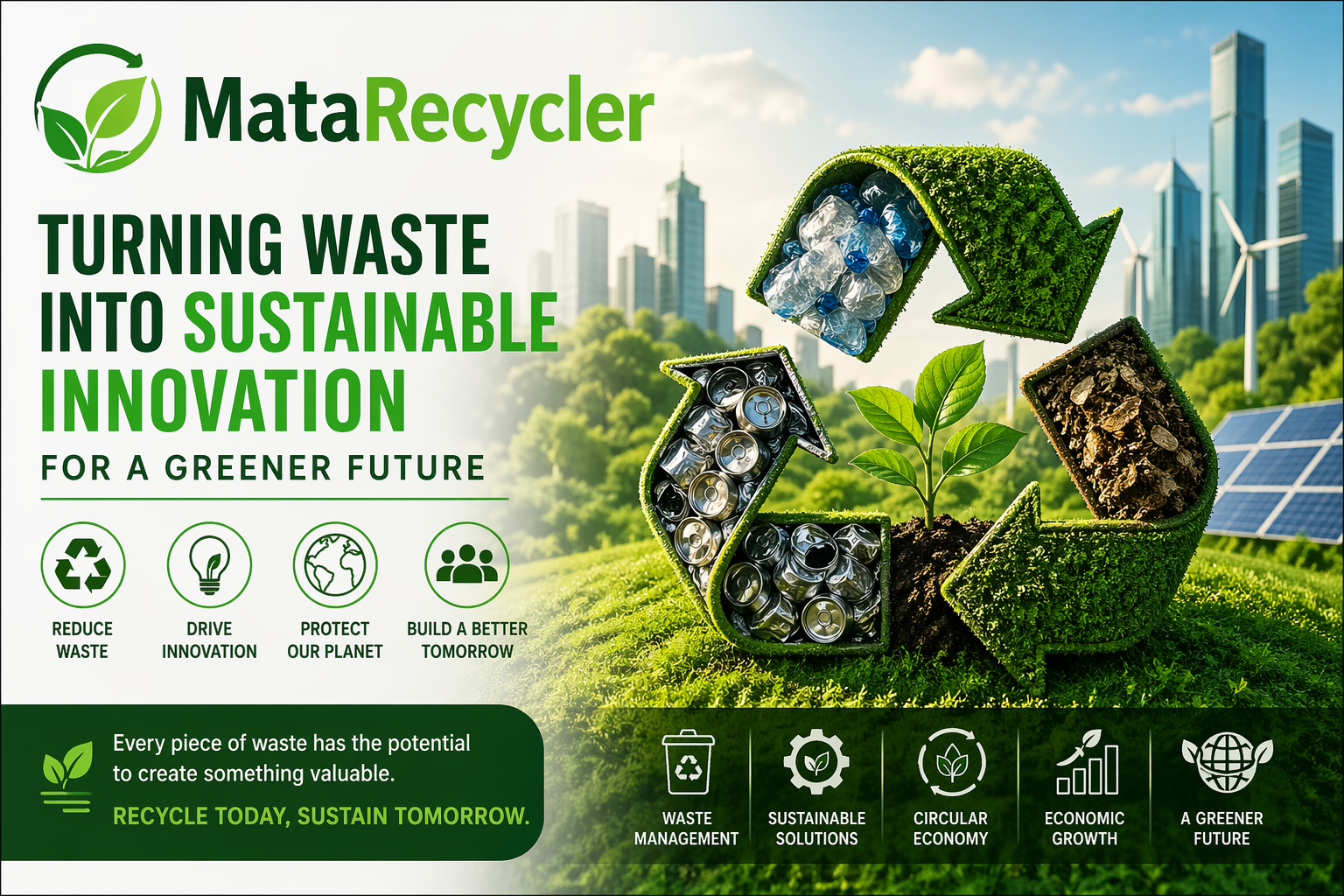
Introduction to MataRecycler and Circular Economy
MataRecycler represents a forward-thinking approach to one of the most pressing global issues: waste management. At its core, the concept revolves around transforming discarded materials into valuable resources, reducing dependency on raw material extraction, and promoting a circular economy. Instead of the traditional “take, make, dispose” model, aligns with sustainable systems that extend the lifecycle of materials.
The Vision Behind MataRecycler
The vision of MataRecycler is rooted in sustainability, innovation, and environmental responsibility. It aims to create a system where waste is continuously reintroduced into production cycles, minimizing landfill dependency and environmental degradation. The idea is to build a self-sustaining ecosystem that benefits both nature and society.
Beyond environmental goals, MataRecycler also envisions a cultural shift. It encourages individuals, businesses, and governments to rethink how they perceive waste. By fostering awareness and responsibility, it creates a mindset where sustainability becomes a shared global priority rather than an optional practice.
How MataRecycler Transforms Waste Materials
MataRecycler operates through a structured process of collection, sorting, processing, and transformation. Waste materials such as plastics, metals, textiles, and organic matter are carefully segregated and treated using advanced recycling techniques. These materials are then converted into reusable raw materials or entirely new products.
This transformation process ensures that valuable resources are not lost in landfills or oceans. Instead, they are reintegrated into industries such as construction, manufacturing, and packaging. By doing so, MataRecycler helps close the loop in material consumption and reduces the pressure on natural ecosystems.
Technology and Innovation Driving the Process
Modern technology plays a crucial role in the efficiency of MataRecycler systems. Artificial intelligence, automation, and advanced sorting machines help identify and separate different types of waste with high precision. This improves recycling rates and reduces contamination in recovered materials.
In addition, innovations such as chemical recycling and bio-based processing allow even complex waste materials to be broken down and reused. These technologies ensure that even previously non-recyclable items can now find a second life, significantly expanding the scope of sustainable waste management.
Environmental Benefits of MataRecycler
One of the most significant advantages of MataRecycler is its positive impact on the environment. By reducing landfill waste, it helps decrease soil and water pollution caused by decomposing materials. It also plays a major role in lowering greenhouse gas emissions associated with waste decomposition and raw material extraction.
Furthermore, contributes to biodiversity protection by minimizing the need for deforestation, mining, and other environmentally damaging activities. As fewer natural resources are exploited, ecosystems have a better chance to recover and maintain balance, supporting long-term ecological stability.
Economic Impact and Job Creation
MataRecycler is not only an environmental solution but also an economic opportunity. The recycling and upcycling industries generate new employment opportunities in collection, sorting, engineering, and product development. This helps boost green job markets in both urban and rural areas.
Additionally, businesses benefit from reduced production costs by using recycled materials instead of virgin resources. This creates a more cost-efficient supply chain while encouraging innovation in product design and sustainable manufacturing practices. As a result, economies become more resilient and resource-efficient.
Challenges in Waste-to-Innovation Systems
Despite its benefits, MataRecycler faces several challenges. One of the main issues is the lack of proper waste segregation at the source, which complicates recycling processes. Without public participation, even advanced systems struggle to operate efficiently and effectively.
Another challenge lies in infrastructure and investment. Many regions lack the necessary facilities and funding to implement large-scale recycling systems. Overcoming these barriers requires strong policy support, public awareness, and collaboration between governments and private sectors.
Future Prospects of MataRecycler
The future of MataRecycler looks promising as global awareness of environmental issues continues to grow. With advancements in technology and stronger sustainability policies, waste-to-resource systems are expected to become a standard part of industrial operations worldwide.
In the coming years, MataRecycler-like models may expand into smart cities, where automated waste systems seamlessly integrate with urban infrastructure. This could lead to near-zero waste environments, where almost every discarded material is reused or repurposed effectively.
Expanding Global Adoption and Community Participation
For MataRecycler to achieve its full potential, global adoption and active community participation are essential. Governments can support this shift by introducing strong recycling policies, incentives for sustainable businesses, and investments in green infrastructure. At the same time, international cooperation can help standardize recycling practices, making it easier to manage waste across borders and reduce environmental disparities between developed and developing regions.
On the community level, awareness campaigns and education play a critical role in changing everyday behavior. When individuals understand how their waste can be transformed into useful materials, they are more likely to separate, reduce, and responsibly dispose of it. Grassroots participation ensures that is not just an industrial system but a shared environmental movement driven by collective responsibility.
FAQs
1. What is MataRecycler?
MataRecycler is a sustainable system that converts waste materials into reusable resources through recycling and innovation.
2. How does MataRecycler help the environment?
It reduces landfill waste, lowers pollution, and minimizes the need for raw material extraction, protecting natural ecosystems.
3. What technologies are used in MataRecycler?
It uses AI-based sorting, automation, chemical recycling, and advanced processing technologies to handle waste efficiently.
4. Can MataRecycler create jobs?
Yes, it generates employment in recycling industries, engineering, logistics, and sustainable product development.
5. What are the main challenges of MataRecycler?
Key challenges include poor waste segregation, limited infrastructure, and the need for higher public awareness.
Conclusion
MataRecycler represents a powerful step toward a more sustainable and responsible future. By transforming waste into valuable resources, it not only addresses environmental challenges but also unlocks economic and technological opportunities. Its approach aligns with the global shift toward circular economies where nothing is truly wasted.