Introduction
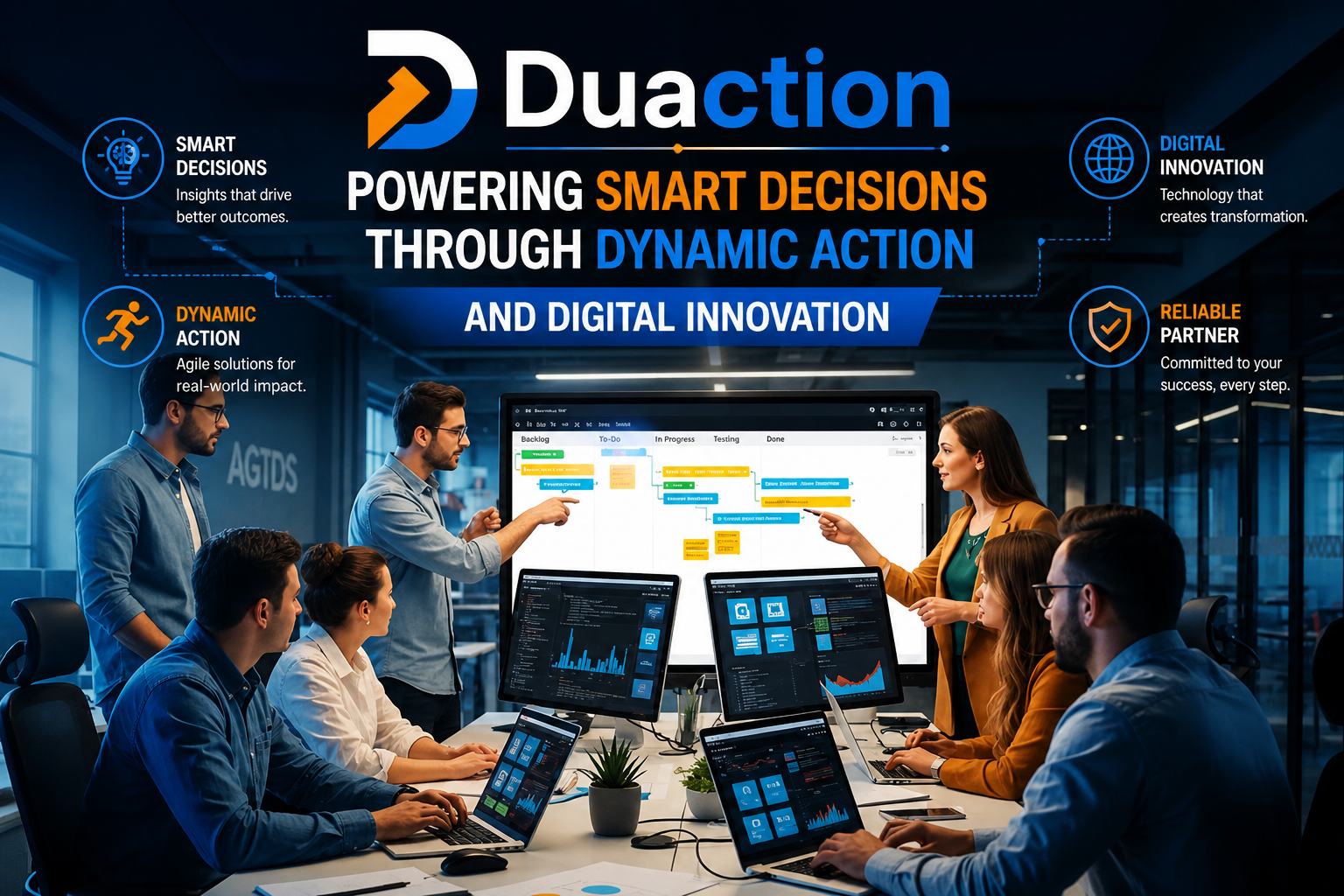
Duaction represents a modern concept centered on the fusion of dynamic action and digital innovation to enable smarter, faster, and more adaptive decision-making systems. In an era defined by rapid technological advancement, organizations and individuals are constantly required to process large volumes of information and respond to changing conditions in real time. Duaction emerges as a framework that emphasizes not just digital intelligence, but also immediate execution, ensuring that insights are transformed into meaningful action without delay.
The Conceptual Foundation of Duaction in Digital Systems
The foundation of Duaction lies in the combination of two essential elements: dynamic intelligence and actionable execution. Dynamic intelligence refers to the ability of systems to continuously analyze, learn, and adapt based on incoming data. Actionable execution ensures that these insights are immediately translated into decisions or operational changes within digital environments.
This dual structure makes Duaction a powerful framework for modern digital ecosystems. Instead of treating decision-making as a separate phase, it integrates analysis and action into a single continuous cycle. This approach reduces latency, improves responsiveness, and allows systems to function in a more fluid and adaptive manner, especially in fast-changing environments such as finance, technology, and logistics.
Smart Decision-Making Through Real-Time Data Processing
Duaction enhances decision-making by leveraging real-time data processing capabilities. In traditional systems, data is often collected, stored, and analyzed in separate stages, which can lead to delays in decision-making. Duaction eliminates these delays by enabling continuous data flow and instant analysis.
This real-time processing allows organizations to respond to changes as they happen. Whether it is market fluctuations, customer behavior shifts, or operational disruptions, ensures that decisions are based on the most current information available. This leads to more accurate, timely, and effective outcomes across all levels of operation.
Dynamic Action Systems and Automated Execution
One of the most powerful aspects of is its emphasis on dynamic action systems. These systems are designed to automatically execute decisions based on predefined rules, AI models, or real-time insights. This reduces the need for manual intervention and ensures that actions are taken quickly and consistently.
Automation plays a key role in this process, allowing systems to perform complex tasks without human delay. From adjusting supply chain operations to optimizing digital marketing campaigns, Duaction-based systems ensure that actions are aligned with insights. This creates a seamless flow between thinking and doing, improving overall system efficiency.
Artificial Intelligence as the Engine of Duaction
Artificial intelligence serves as the driving force behind Duaction, enabling systems to analyze data, recognize patterns, and make intelligent decisions. AI models continuously learn from new inputs, improving their accuracy and effectiveness over time. This allows systems to become more refined and adaptive with continued use.
In addition, AI enhances predictive capabilities, allowing systems to anticipate future events and prepare appropriate responses in advance. This predictive intelligence transforms decision-making from reactive to proactive, giving organizations a significant advantage in competitive environments. AI ensures that remains intelligent, scalable, and future-ready.
Integration of Automation and Human Intelligence
Duaction does not aim to replace human intelligence but rather to enhance it through integration with automation. Human decision-makers provide strategic direction, creativity, and contextual understanding, while automated systems handle execution and data processing. This collaboration creates a balanced and efficient decision-making ecosystem.
By combining human insight with machine precision, Duaction ensures that decisions are both intelligent and actionable. This hybrid approach improves accuracy while maintaining flexibility. It allows organizations to benefit from the strengths of both human cognition and machine efficiency, resulting in more effective outcomes.
Efficiency and Optimization in Digital Ecosystems
Efficiency is a central goal of, achieved through optimized workflows and streamlined processes. By reducing delays between analysis and action, systems can operate more smoothly and effectively. This optimization extends across various digital environments, including business operations, communication networks, and data management systems.
Duaction also helps eliminate redundancies and inefficiencies by ensuring that only relevant actions are executed based on real-time insights. This reduces waste, saves time, and improves resource utilization. As a result, organizations can achieve higher productivity levels while maintaining operational stability.
Security, Reliability, and System Trustworthiness
As digital systems become more automated and interconnected, security and reliability become essential. Duaction addresses these concerns by integrating advanced security protocols, encryption techniques, and intelligent monitoring systems. These features ensure that data remains protected throughout the decision-making and execution process.
Reliability is also a key component, as systems must consistently perform accurate actions without failure. Duaction frameworks are designed with redundancy and error-checking mechanisms to maintain system integrity. This builds trust in automated processes and ensures that users can depend on digital systems for critical decision-making tasks.
The Future of Duaction in Intelligent Digital Transformation
The future of Duaction lies in its ability to scale across industries and integrate with emerging technologies such as advanced AI, edge computing, and autonomous systems. As digital environments become more complex, the need for real-time decision-action integration will continue to grow, making increasingly relevant.
In the coming years, Duaction is expected to play a key role in shaping intelligent digital transformation across sectors such as healthcare, finance, logistics, and smart cities. Its ability to combine dynamic intelligence with immediate execution positions it as a foundational framework for next-generation digital ecosystems.
FAQs
1. What is Duaction?
Duaction is a digital concept that combines dynamic decision-making with immediate action, enabling real-time intelligent execution of tasks.
2. How does Duaction improve decision-making?
It improves decision-making by using real-time data processing and AI-driven insights to ensure faster and more accurate responses.
3. What role does AI play in Duaction?
AI acts as the core engine, enabling predictive analysis, automation, and continuous learning within the system.
4. Does Duaction replace human involvement?
No, it enhances human intelligence by combining it with automation, allowing humans to focus on strategy while systems handle execution.
5. Where can Duaction be applied?
It can be applied across industries such as business operations, finance, healthcare, logistics, and digital communication systems.
Conclusion
Duaction represents a transformative shift in how digital systems approach decision-making and execution. By combining dynamic intelligence with automated action, it creates a seamless flow between insight and implementation, significantly improving efficiency and responsiveness in modern digital environments.