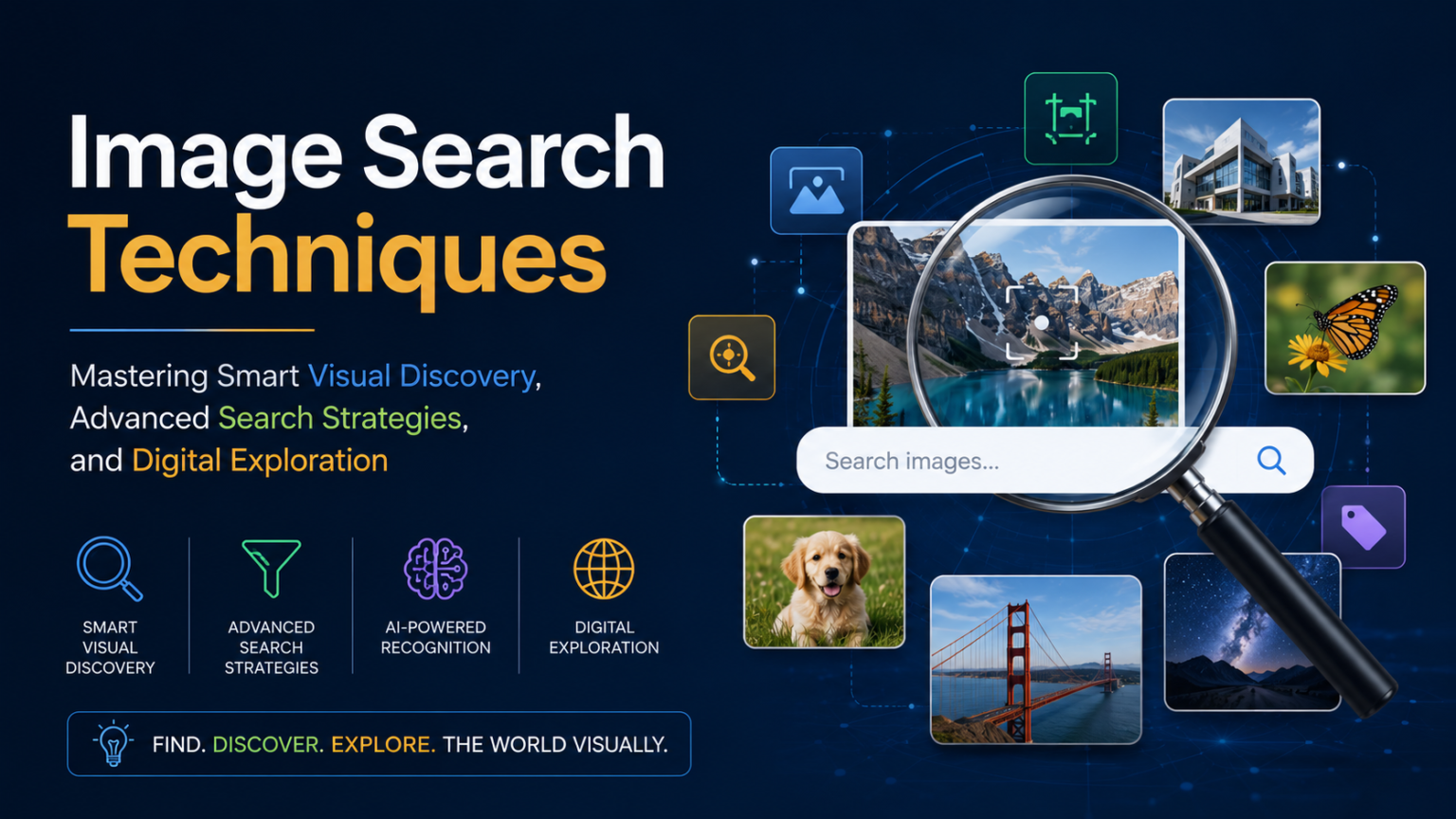
Introduction
In today’s digital world, images play a crucial role in communication, education, marketing, entertainment, and research. Every day, billions of visual assets are uploaded, shared, and indexed across websites, social media platforms, online stores, and digital archives. As the volume of visual content continues to grow, finding the right image quickly and accurately has become increasingly important. This is where image search techniques come into play. Image search is no longer limited to typing a few keywords into a search engine; it now involves advanced technologies that help users locate, analyze, and discover visual content more efficiently than ever before.
Understanding the Fundamentals of Image Search
Image Search Techniques refers to the process of locating visual content through specialized search engines or digital databases. Traditional image search systems relied heavily on text-based descriptions, filenames, and surrounding webpage content. Search engines analyzed these textual elements to determine image relevance and display appropriate results. While effective to some extent, this method often struggled when image descriptions were incomplete, inaccurate, or missing entirely.
The evolution of image recognition technologies has transformed how visual Image Search Techniques operates today. Modern systems can analyze the actual content of an image, identifying objects, colors, shapes, faces, landmarks, and patterns. This capability allows search engines to understand visual information more accurately and provide users with highly relevant results. As technology continues to advance, image search is becoming increasingly intelligent, enabling users to discover content based on visual similarities rather than relying solely on keywords.
The Role of Artificial Intelligence in Visual Discovery
Artificial intelligence has become one of the most significant driving forces behind modern Image Search Techniques systems. AI-powered algorithms can analyze millions of images within seconds, detecting patterns and features that would be impossible for humans to process manually. These systems continuously learn from user interactions, improving search accuracy and personalization over time.
Machine learning models can classify Image Search Techniques into categories, recognize objects, identify scenes, and even interpret emotions expressed within photographs. This level of understanding enhances the user experience by delivering results that closely match search intent. AI also enables advanced features such as automatic tagging, image recommendations, and predictive search suggestions, making visual discovery faster, smarter, and more intuitive.
Reverse Image Search and Its Applications
Reverse Image Search Techniques is one of the most powerful techniques available for digital exploration. Instead of entering text, users upload an image or provide an image URL to find visually similar content across the internet. This approach is particularly useful when the user lacks descriptive information about an image or wants to identify its source.
Professionals and everyday users alike benefit from reverse Image Search Techniques in numerous ways. Journalists can verify image authenticity, researchers can locate original sources, and businesses can monitor unauthorized use of branded visuals. Additionally, consumers can identify products, compare prices, and discover related items through visual matching technology, making reverse image search an essential tool for online investigation and discovery.
Metadata Optimization for Better Image Search Results
Metadata serves as the hidden information attached to digital images, including titles, descriptions, keywords, creation dates, and location details. Properly optimized metadata helps search engines understand Image Search Techniques content and improves visibility in search results. Without relevant metadata, even high-quality images may struggle to reach their intended audience.
Content creators and website owners can enhance image discoverability by using descriptive filenames, accurate alt text, and meaningful captions. Structured metadata not only improves accessibility but also strengthens Image Search Techniques engine optimization efforts. As search algorithms become more sophisticated, comprehensive metadata remains a valuable component of effective image search strategies.
Visual Similarity Search Techniques
Visual similarity search focuses on finding Image Search Techniques that resemble a reference image based on color composition, texture, shape, and overall visual structure. Unlike keyword-based searches, this method analyzes image characteristics directly, allowing users to discover related visuals that may not share common textual descriptions.
This technology is widely used in e-commerce, digital asset management, and creative industries. Designers can locate inspiration Image Search Techniques, retailers can recommend similar products, and photographers can organize extensive image collections efficiently. Visual similarity search continues to evolve as computer vision algorithms become more accurate and capable of understanding complex visual relationships.
Advanced Search Filters and Refinement Methods
Advanced Image Search Techniques filters help users narrow down large volumes of image results by applying specific criteria such as size, color, format, usage rights, date, and content type. These filters improve search efficiency by eliminating irrelevant results and focusing on the most suitable visual assets.
Refinement techniques also include combining keywords, using exact phrases, excluding terms, and applying contextual searches. These methods allow users to conduct highly targeted Image Search Techniques tailored to specific needs. Whether searching for educational resources, commercial graphics, or historical photographs, advanced filtering significantly enhances the quality and relevance of search outcomes.
Image Search for Research and Professional Use
Researchers, educators, marketers, and business professionals increasingly rely on Image Search Techniques to support their work. Academic researchers use image databases to analyze historical records, scientific diagrams, and visual evidence. Marketers leverage image search tools to identify trends, monitor competitors, and gather creative inspiration.
Professional applications extend beyond content discovery. Image Search Techniques can assist with copyright management, brand monitoring, digital asset organization, and market analysis. By integrating advanced search strategies into daily workflows, professionals can access valuable visual information more efficiently and make better-informed decisions based on visual data.
Future Trends in Smart Visual Exploration
The future of Image Search Techniques is being shaped by emerging technologies such as augmented reality, deep learning, and multimodal search systems. These innovations aim to bridge the gap between visual and textual information, enabling users to interact with digital content in more natural and intuitive ways.
As computer vision capabilities continue to improve, Image Search Techniques systems will become increasingly context-aware and personalized. Future platforms may understand user intent more accurately, recognize complex scenes with greater precision, and provide seamless integration across devices and applications. These advancements promise to transform digital exploration and redefine how people interact with visual information online.
FAQs
What is image search?
Image Search Techniques is the process of finding visual content using search engines, databases, or specialized visual recognition technologies.
What is reverse image search?
Reverse Image Search Techniques allows users to upload an image and find similar images, related content, or the original source online.
How does artificial intelligence improve image search?
AI analyzes visual elements, recognizes objects, and learns user preferences to provide more accurate and relevant search results.
Why is metadata important for image search?
Metadata helps Image Search Techniques engines understand image content, improving visibility, discoverability, and search ranking.
What are visual similarity searches used for?
They help users find Image Search Techniques that look similar to a reference image based on visual characteristics rather than text descriptions.
Can image search help businesses?
Yes, businesses use Image Search Techniques for brand monitoring, product discovery, competitor analysis, marketing research, and digital asset management.
Conclusion
Image search techniques have evolved far beyond simple keyword matching, becoming sophisticated systems powered by artificial intelligence, machine learning, and computer vision technologies. These advancements enable users to discover, analyze, and organize visual content with greater speed and accuracy. From reverse image search and metadata optimization to visual similarity analysis and advanced filtering, modern search methods offer powerful tools for navigating the vast digital landscape.