Introduction
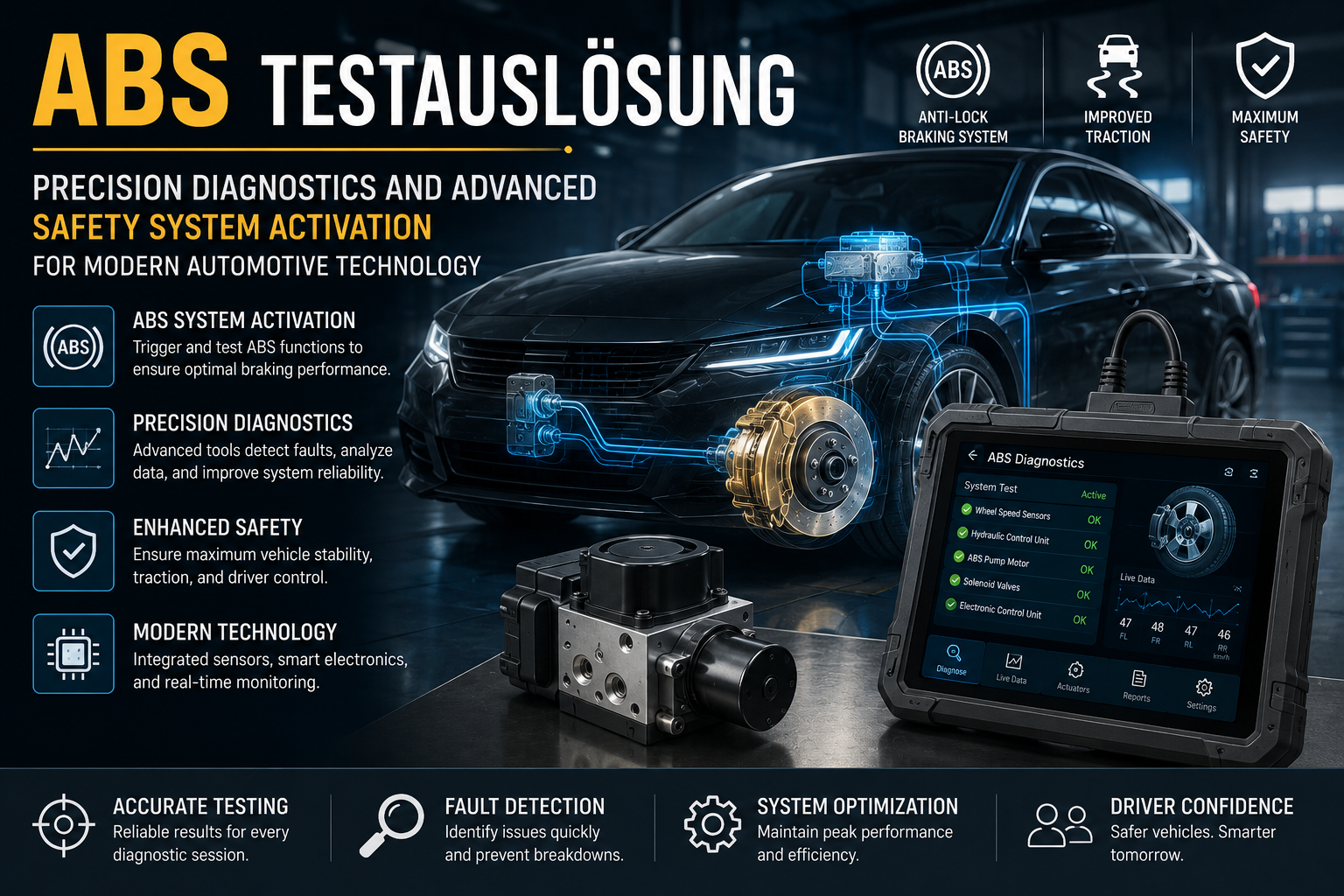
Modern vehicles are equipped with sophisticated safety technologies designed to protect drivers, passengers, and pedestrians. Among these innovations, the Anti-lock Braking System (ABS) stands as one of the most important advancements in automotive safety. ABS prevents wheel lock-up during sudden braking situations, helping drivers maintain steering control and vehicle stability. The term “ABS Testauslösung” refers to the activation or triggering of ABS testing procedures used to evaluate the performance, reliability, and responsiveness of the braking system. As automotive technology becomes increasingly complex, accurate ABS diagnostics play a critical role in ensuring optimal vehicle safety and performance.
Understanding the Fundamentals of ABS Technology
The Anti-lock Braking System is designed to prevent wheels from locking during emergency braking situations. By rapidly modulating brake pressure, ABS helps maintain traction between the tires and road surface, allowing drivers to retain steering control. This technology significantly reduces the risk of skidding and improves vehicle stability, especially on slippery or uneven road conditions.
ABS Testauslösung operates through a combination of wheel speed sensors, hydraulic control units, electronic control modules, and braking components. These elements work together to monitor wheel behavior and adjust braking force accordingly. Understanding the fundamentals of ABS technology provides valuable insight into why proper testing and system activation procedures are essential for maintaining safe and reliable vehicle operation.
The Importance of ABS Testauslösung in Vehicle Safety
ABS Testauslösung serves as a critical process for verifying that the braking system responds correctly under various operating conditions. Regular testing ensures that sensors, actuators, and control modules function as intended and can effectively intervene during emergency braking situations. Without proper testing, hidden system faults may remain undetected, increasing safety risks for vehicle occupants.
Vehicle manufacturers and service professionals rely on ABS activation tests to evaluate system readiness and compliance with safety standards. These tests help identify electronic faults, sensor malfunctions, hydraulic issues, and communication errors within the vehicle’s safety network. By detecting problems early, ABS Testauslösung contributes to preventive maintenance and enhances overall driving safety.
Diagnostic Tools Used in ABS Testing
Modern ABS Testauslösung diagnostics depend on specialized tools capable of communicating with vehicle control systems. Diagnostic scanners connect to onboard computers and retrieve fault codes, sensor readings, and performance data. These tools allow technicians to monitor system behavior and perform controlled activation tests without disassembling major vehicle components.
Advanced diagnostic equipment provides real-time analysis of wheel speed data, brake pressure values, and electronic control unit responses. Some systems offer graphical displays and automated testing procedures that simplify troubleshooting. As vehicle technology continues to evolve, diagnostic tools have become increasingly sophisticated, enabling more accurate and efficient ABS Testauslösung evaluations.
Sensor Performance and System Monitoring
Wheel speed sensors are among the most important components within an ABS Testauslösung system. These sensors continuously monitor wheel rotation and transmit data to the electronic control module. Accurate sensor performance is essential because the ABS relies on precise information to determine when braking intervention is required.
ABS Testauslösung often includes detailed sensor evaluations to verify signal quality, response times, and operational consistency. Faulty sensors can produce incorrect data, leading to reduced braking performance or warning light activation. Continuous monitoring and testing ensure that sensors function correctly and support the safe operation of the vehicle’s braking system.
Electronic Control Units and Intelligent Braking Systems
The electronic control unit serves as the brain of the ABS Testauslösung system. It processes information received from sensors and determines how braking force should be adjusted during critical driving situations. Modern control units operate at extremely high speeds, making thousands of calculations within seconds to maintain vehicle stability and traction.
During ABS Testauslösung, technicians evaluate communication between the control unit and other vehicle systems. Intelligent braking systems often integrate with traction control, electronic stability control, and advanced driver assistance technologies. Testing these interconnected systems helps ensure seamless operation and enhances the vehicle’s overall safety performance.
Advanced Testing Procedures and Simulation Techniques
Modern automotive workshops use advanced testing procedures to simulate real-world driving conditions. Controlled ABS Testauslösung activation allows technicians to observe system behavior without exposing drivers to actual emergency situations. These simulations provide valuable insights into braking performance, hydraulic pressure regulation, and electronic response accuracy.
Sophisticated testing environments may include roller benches, computerized simulation systems, and dynamic vehicle testing platforms. These methods enable comprehensive evaluations of braking efficiency and system reliability. By replicating challenging driving conditions, technicians can identify weaknesses and verify that safety systems perform as intended under stress.
Preventive Maintenance and Long-Term Reliability
Preventive maintenance is a key factor in ensuring long-term ABS Testauslösung reliability. Regular inspections, diagnostic checks, and activation tests help detect wear, contamination, electrical faults, and hydraulic issues before they affect system performance. Preventive strategies reduce the likelihood of unexpected failures and improve vehicle dependability.
ABS Testauslösung supports maintenance programs by providing detailed performance assessments. Early fault detection minimizes repair costs and helps vehicle owners avoid more extensive system damage. Consistent maintenance practices contribute to safer driving experiences and extend the operational lifespan of critical braking components.
The Future of ABS Diagnostics and Automotive Safety
The future of ABS Testauslösung diagnostics is closely connected to advancements in vehicle connectivity, artificial intelligence, and predictive maintenance technologies. Emerging systems can continuously monitor component health and alert drivers or service providers when abnormalities are detected. This proactive approach improves safety and reduces downtime.
As autonomous driving technologies become more widespread, ABS systems will play an even greater role in vehicle control and accident prevention. Future diagnostic platforms may incorporate machine learning algorithms capable of identifying potential failures before symptoms become noticeable. These innovations will further enhance precision diagnostics and strengthen the safety foundations of modern automotive technology.
FAQs
What does ABS Testauslösung mean?
ABS Testauslösung refers to the activation or triggering of ABS testing procedures used to evaluate the performance and functionality of the Anti-lock Braking System.
Why is ABS testing important?
ABS Testauslösung testing helps identify faults, verify system performance, and ensure that the braking system operates correctly during emergency situations.
What tools are used for ABS diagnostics?
Technicians use diagnostic scanners, computerized testing equipment, sensor analysis tools, and simulation platforms to evaluate ABS performance.
How often should ABS systems be tested?
ABS Testauslösung systems should be inspected during routine vehicle maintenance and whenever warning indicators or braking performance concerns arise.
Can a faulty ABS sensor affect vehicle safety?
Yes, malfunctioning sensors can provide inaccurate data, reducing ABS effectiveness and potentially compromising vehicle stability during braking.
What is the future of ABS diagnostics?
Future ABS diagnostics will likely involve artificial intelligence, predictive maintenance, connected vehicle systems, and real-time performance monitoring.
Conclusion
ABS Testauslösung represents a vital component of modern automotive diagnostics, ensuring that anti-lock braking systems function reliably under a wide range of driving conditions. Through advanced testing procedures, sensor evaluations, and electronic system analysis, technicians can verify braking performance and identify potential issues before they compromise safety. As vehicles become increasingly sophisticated, precise diagnostic practices remain essential for maintaining optimal system functionality.