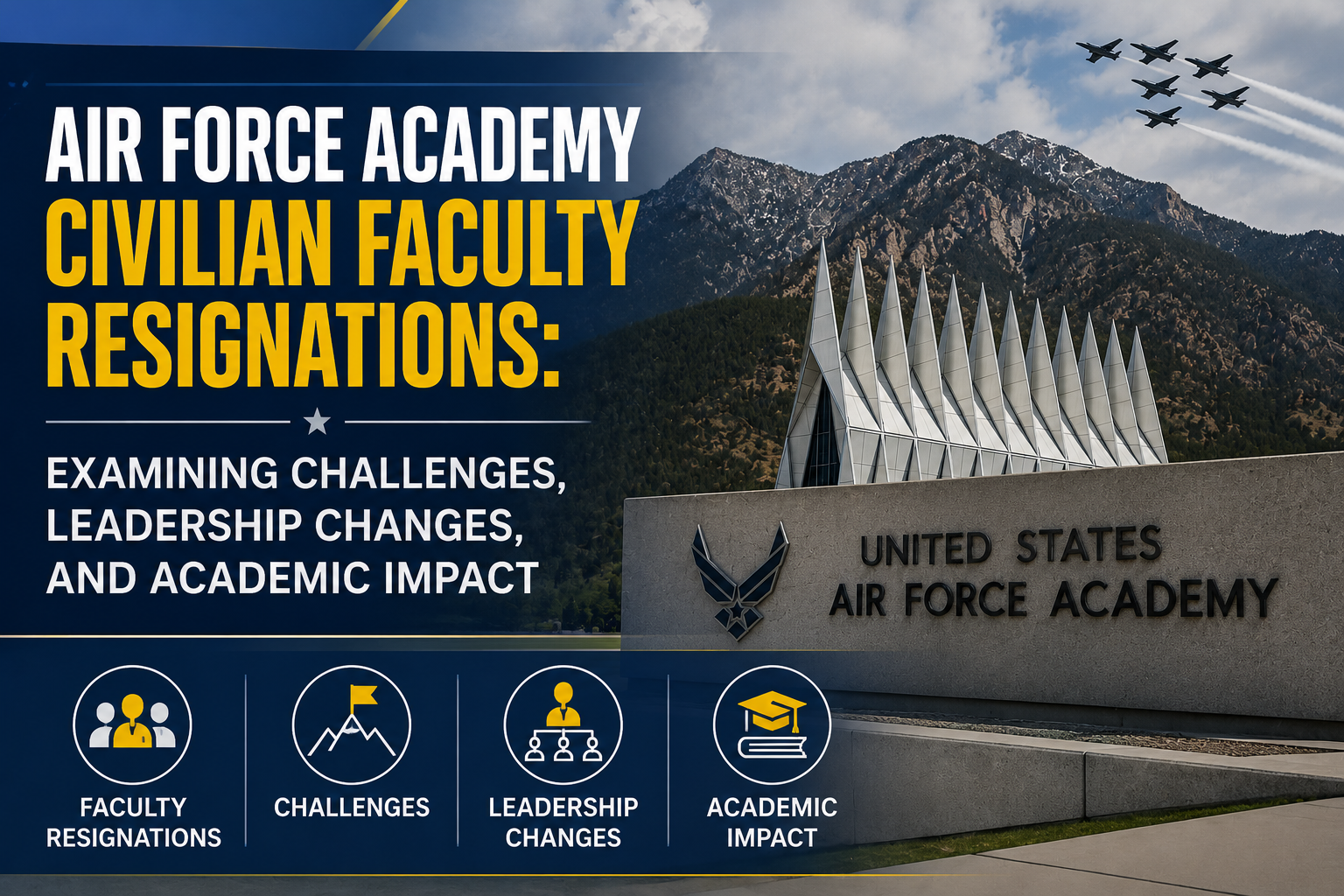
Introduction
Air Force academies represent some Air Force Academy civilian faculty resignations the most important educational institutions responsible for preparing future military leaders with knowledge, discipline, and strategic thinking abilities. While military instructors provide valuable operational experience, civilian faculty members contribute specialized academic expertise, research skills, and diverse perspectives that strengthen the overall learning environment. The presence of civilian educators allows cadets to receive a balanced education that combines military values with advanced academic knowledge. However, increasing attention toward civilian faculty resignations has raised questions about institutional challenges, leadership decisions, workplace conditions, and the future direction of academic programs.
The Essential Role of Civilian Faculty in Air Force Academies
Civilian faculty members play a significant role in developing Air Force Academy civilian faculty resignations strong academic foundation for cadets. They teach a wide range of subjects, including engineering, technology, mathematics, history, leadership studies, ethics, and social sciences. Their academic backgrounds allow them to introduce research-based knowledge and innovative teaching methods that complement military training. By bringing experience from universities, research institutions, and professional fields, civilian professors help prepare cadets for complex challenges in modern defense environments.
Another important contribution Air Force Academy civilian faculty resignations civilian faculty is institutional stability. Military instructors often change assignments due to career requirements, while civilian professors typically provide long-term continuity within academic departments. They maintain research programs, mentor students over multiple years, and support curriculum development. When these experienced educators resign, academies may face difficulties replacing their expertise and preserving academic consistency.
Major Challenges Leading to Civilian Faculty Resignations
Several challenges can contribute to civilian faculty members choosing Air Force Academy civilian faculty resignations leave Air Force academies. One common concern involves differences between military organizational structures and traditional academic environments. Civilian professors often value independent research, open discussion, and academic flexibility, while military institutions require strict procedures and organizational discipline. Finding a balance between these expectations can sometimes become difficult.
Workload and resource limitations are also important factors. Faculty members are often responsible for teaching courses, conducting research, advising students, participating in committees, and supporting institutional projects. When responsibilities increase without sufficient support, job satisfaction may decline. Additionally, changes in academic priorities or administrative procedures Air Force Academy civilian faculty resignations create uncertainty among faculty members who have built their careers around specific educational goals.
Leadership Changes and Their Effect on Faculty Relationships
Leadership transitions can strongly influence faculty experiences within Air Force Academy civilian faculty resignations Air Force Academy. New leaders often introduce different management styles, strategic priorities, and approaches to academic development. While leadership changes can bring positive improvements, they may also create uncertainty if faculty members feel excluded from decision-making processes.
Effective leadership requires communication, transparency, and cooperation. Civilian faculty members need to understand the reasons behind institutional changes and how those changes affect academic programs. When leaders create opportunities Air Force Academy civilian faculty resignations discussion and collaboration, faculty members are more likely to feel valued and connected to the academy’s mission. Poor communication, however, can contribute to frustration and increase the possibility of resignations.
Academic Consequences of Civilian Faculty Departures
The resignation of civilian faculty members can have direct and indirect effects Air Force Academy civilian faculty resignations academic programs. One immediate challenge is maintaining course availability, especially in specialized subjects where experienced instructors are difficult to replace. Remaining faculty members may experience increased workloads as they attempt to cover additional responsibilities while maintaining educational quality.
Faculty departures can also affect research activities and academic partnerships. Professors often lead important projects, publish studies, and create opportunities for cadets to participate in advanced research. When these educators leave, ongoing initiatives may face delays or require restructuring. However, new faculty recruitment can also bring fresh perspectives, emerging expertise, and innovative approaches that benefit the institution Air Force Academy civilian faculty resignations the long term.
Maintaining Balance Between Military Discipline and Academic Freedom
Air Force academies operate within Air Force Academy civilian faculty resignations unique environment where military traditions and academic principles must exist together. Civilian faculty members contribute by encouraging critical analysis, creativity, and independent thinking among cadets. These skills are essential for future military leaders who must make complex decisions in uncertain environments.
At the same time, academies must ensure that academic programs support military objectives Air Force Academy civilian faculty resignations national security requirements. Maintaining this balance requires mutual respect between military leadership and civilian educators. Institutions that successfully combine discipline with intellectual freedom are more likely to create a productive environment where both faculty members and students can succeed.
Improving Civilian Faculty Retention Strategies
Reducing faculty resignations requires Air Force Academy civilian faculty resignations comprehensive approach focused on improving workplace conditions and strengthening professional relationships. Air Force academies can improve retention by creating clearer communication channels, recognizing faculty achievements, and involving educators in important academic discussions. When professors feel their opinions are respected, they are more likely to remain committed to the institution.
Professional development opportunities, research support, Air Force Academy civilian faculty resignations manageable workloads are also essential for maintaining faculty satisfaction. Competitive benefits and opportunities for career growth can help academies attract and retain highly qualified educators. Investing in faculty members ultimately strengthens the quality of education provided to future military leaders.
Future Impact on Air Force Academy Education
The future of Air Force Academy education depends Air Force Academy civilian faculty resignations how effectively institutions respond to faculty challenges. Civilian educators will continue to provide valuable expertise in areas such as artificial intelligence, cybersecurity, engineering, international relations, and leadership development. Their contributions are essential for preparing cadets to address modern security challenges.
Addressing resignation issues requires more than hiring replacements. Academy leaders must understand the underlying reasons behind faculty departures and create an environment that supports collaboration, innovation, and academic excellence. A strong partnership between military leadership and civilian educators will remain essential Air Force Academy civilian faculty resignations maintaining successful academic programs.
FAQs
Why do civilian faculty members resign from Air Force academies?
Civilian faculty members may resign due Air Force Academy civilian faculty resignations leadership changes, workload challenges, career opportunities, policy differences, or concerns about workplace conditions and professional growth.
How important are civilian faculty members in military education?
Civilian faculty members are highly important because they provide specialized academic knowledge, research experience, and diverse viewpoints that enhance cadet education.
Do faculty resignations affect students?
Yes, faculty departures can influence course availability, research opportunities, Air Force Academy civilian faculty resignations academic continuity. However, effective leadership and recruitment can reduce negative effects.
Can leadership changes improve academic programs?
Yes, leadership changes can introduce new ideas and improvements. Successful transitions depend on communication, collaboration, and respect for faculty contributions.
What steps can reduce faculty turnover?
Institutions can reduce turnover by improving workplace culture, supporting research, maintaining reasonable workloads, Air Force Academy civilian faculty resignations creating opportunities for professional development.
Conclusion
Air Force Academy civilian faculty resignations highlight important issues related to leadership, organizational culture, academic priorities, and institutional adaptation. Civilian educators provide essential knowledge and stability that strengthen military education and prepare cadets for future responsibilities. When experienced faculty members leave, academies must address both the immediate challenges and the deeper factors influencing retention.